
by Mohamed Elbebhairy | Nov 24, 2025 | Events
Fire water booster pumps, are essential to fire safety systems in commercial and residential buildings.
These pumps improve the pressure and flow of water within a fire protection system, ensuring an adequate and dependable water supply for fighting fires in an emergency.
How does the Fire water booster pump work?
The power supply for fire water booster pumps may differ according to the fire protection system’s particular design and application. These pumps are powered by two sorts of sources: diesel and electric.
Fire-Water Booster Pumps Operated by Electrical Power:
Electrically powered pumps are a common choice due to their ready availability. These pumps are connected to the electrical grid and are designed to activate automatically upon receiving a signal from fire alarm panels, ensuring prompt response in fire emergencies.
Fire-Water Booster Pumps operated by diesel power:
Diesel-powered pumps are essential when the electricity supply is unreliable or during power outages. These pumps are equipped with diesel engines capable of generating energy for pumping water, independent of the electrical grid. This makes them a preferred choice for critical facilities where uninterrupted operation during emergencies is paramount.
Electrical or diesel-fired water Booster pumps?
The selection of diesel or electric-powered booster pumps depends on various factors. Both types are recognized in fire codes, but the choice hinges on specific needs and contexts. Recent technological advancements have led to the development of hybrid systems. These innovative systems can automatically switch between diesel and electric power, optimizing for energy efficiency and performance based on the reliability and availability of each power source.
When designing a fire prevention system that incorporates water booster pumps, it’s essential to consider the facility’s unique requirements and adhere to local codes. Consulting with fire safety engineers and relevant authorities ensures compliance with all necessary regulations and standards.
Read More About : Firefighting Tools And Equipments
Advantages of Fire booster pump
Fire water booster pumps are vital in fire protection systems, offering a reliable and sufficient water supply for firefighting. Key benefits include:
Increased water pressure:
They significantly boost water pressure, enabling water to reach higher floors and extend over larger areas, essential in multi-story buildings.
Consistent Flow Rate:
These Fire water booster pumps ensure a steady water flow, which is crucial for maintaining an adequate supply during firefighting operations.
Quick Response:
Booster pumps facilitate a quick response to fires, providing immediate and enhanced water supply. This rapid action is critical for firefighters to control and contain fires swiftly.
Read Also
Firefighting Water Sprinkler Network
fire hydrant and monitor
Fire Hose Cabinet Types
Fire Alarm Types
Conventional Fire Alarm Panels
Foam Firefighting Equipment in Saudi Arabia
Fire Suppression for Sale
by Mohamed Elbebhairy | Nov 24, 2025 | Events
Owning property necessitates protection against unexpected events. One of the most critical aspects of this protection is the implementation of robust fire alarm systems. Recognizing the significance of this, Advanced Systems, with offices in Egypt and KSA, stands as a stalwart provider of cutting-edge fire alarm solutions. This article will discuss fire alarm types, shedding light on the diverse components contributing to comprehensive property safety.
Fire Alarm Types Systems
There are many types of fire alarm devices that makes different functions like the below
Fire Sensors – The First Line of Defense
Fire sensors, the frontline guardians of a robust fire alarm system, swiftly detect flames by sensing changes in infrared radiation. Their high sensitivity ensures early detection, crucial for prompt response measures to minimize potential damage. Placing them strategically in areas prone to fire risk enhances overall efficacy, making them indispensable for proactive fire safety in industrial or commercial settings.
Smoke Detectors – Early Detection for Evacuation
Smoke detectors, vital counterparts to fire sensors, provide early warning signs by sensing smoke particles. Ionization detectors excel in detecting fast-burning fires, while photoelectric detectors are adept at sensing slow, smoldering fires. Integrating both types ensures a well-rounded defense strategically placed throughout the property to prompt timely evacuation, reducing the potential for injuries and fatalities.

types of fire alarm systems
Heat Detectors – Sensing Temperature Changes
In tandem with fire sensors and smoke detectors, heat detectors play a crucial role in sensing significant temperature increases. Triggering an alarm when predetermined thresholds are exceeded proves valuable in areas where smoke detectors may not be suitable. Strategic placement, especially in specialized areas like kitchens, ensures optimal coverage, adapting the fire alarm system to diverse environmental challenges within the property.
know about click here: How Fire Alarm System Works?
Synergy for Optimal Coverage
While each detector serves a distinct purpose, the true strength of a fire alarm system lies in its collective synergy. The combination of fire sensors, smoke detectors, and heat detectors maximizes the chances of early detection, providing property owners with a comprehensive defense against various fire incidents. This multi-layered approach forms the foundation of a robust and adaptive fire safety strategy for your property, ensuring optimal coverage and protection.
Fire Alarm Systems: Exploring Various Fire Alarm Types
In addition to the fundamental components of fire alarm systems, property owners can choose from various system types, each designed to cater to specific needs and property layouts.
read also about: Types of Firefighting Systems
Two-Wire Fire Alarm Systems
Utilizing a two-wire configuration, this system offers flexibility, streamlined detector recognition, and the ability to isolate specific areas. The simplicity of the two-wire setup contributes to efficient installation and maintenance, making it a practical choice for various property types.
Wireless Fire Alarm Systems
Wireless fire alarm systems operate without the constraints of cables and provide unparalleled flexibility and swift installation. Ideal for properties where wired systems might be impractical, this type ensures comprehensive coverage without the need for extensive wiring, adapting easily to evolving property layouts.
Conventional Fire Alarm Systems
In this system, detectors are hardwired individually to the control panel. Conventional fire alarm systems are suitable for smaller properties, offering a cost-effective solution for basic fire detection needs. While not as advanced as other systems, they remain reliable for less complex structures.
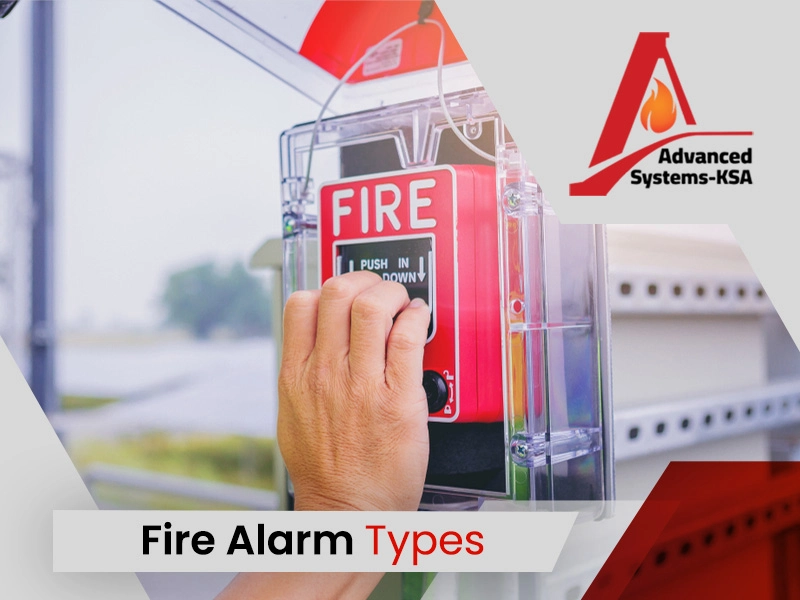
Manual Fire Alarm Systems
– Manual Activation: Relies on manual activation through pull stations or break glass units.
– Simple and Direct: Often used in smaller buildings or areas where direct control is preferred.
Analogue-Addressable Fire Alarm Systems
Distinguished by their intelligence, analogue-addressable systems connect components to the control panel, allowing for specific identification of activated devices. This advanced level of precision aids in pinpointing the exact location of potential issues, making them an excellent choice for larger and more complex properties.
Hybrid Fire Alarms
Combining the strengths of hardwired and wireless systems, hybrid fire alarms offer a customizable and efficient solution. This flexibility allows property owners to adapt their fire alarm systems to the unique needs of their spaces, providing a balance between reliability and modern convenience.
Aspirating Smoke Detection Systems
For a compassionate option, aspirating smoke detection systems employ a fan to pull in the air, allowing for the swift detection of small fires. Ideal for environments where early detection is critical, such as data centers or facilities housing delicate equipment, these systems provide an additional layer of protection against potential fire hazards.
In conclusion, this article has illuminated the crucial components and diverse fire alarm types, emphasizing the need for informed decisions to overcome property-specific challenges. Property owners are encouraged to contact Advanced Systems for expert guidance, ensuring a tailored and comprehensive approach to fire safety in Egypt and KSA
Read Also
Foam Firefighting Equipment in Saudi Arabia
Fire Cabinet Hose Suppliers in KSA
Fire hydrant and monitor
Firefighting Tools And Equipments
Firefighting Water Sprinkler Network