
Detect Fire Alarm System: How Modern Fire Alarm Systems Protect Facilities in Saudi Arabia
The ability to detect fire alarm system signals accurately and respond within seconds is what separates facilities that survive fire emergencies from those that suffer catastrophic losses. A modern fire alarm system is not simply a collection of detectors and sounders — it is an integrated intelligence network that monitors your facility continuously, identifies the earliest signs of fire, and triggers a coordinated emergency response before a situation becomes uncontrollable. Advanced Systems designs, supplies, and installs certified fire alarm systems across Saudi Arabia, engineered to meet NFPA 72 standards and Saudi Civil Defense requirements for commercial, industrial, healthcare, and infrastructure facilities of every scale.
What Is a Fire Alarm System and How Does It Work?
A fire alarm system is an active fire protection network consisting of detection devices, notification appliances, and a central control panel — all interconnected to identify fire conditions and alert building occupants for safe evacuation. When a detector senses smoke, heat, or gas, it sends a signal to the fire alarm control panel, which processes the input, activates audible and visual notification devices, and — in integrated installations — triggers suppression systems and notifies emergency services simultaneously.
The speed and accuracy with which a system can detect fire alarm events directly determines how much time occupants have to evacuate and how quickly suppression systems can engage to limit fire spread and property damage. This is why system design, device selection, and installation quality are all equally critical to overall fire safety performance.
Key Components of a Fire Alarm System
A professionally engineered fire alarm system integrates several core components, each playing a specific role in the detection-to-notification sequence:
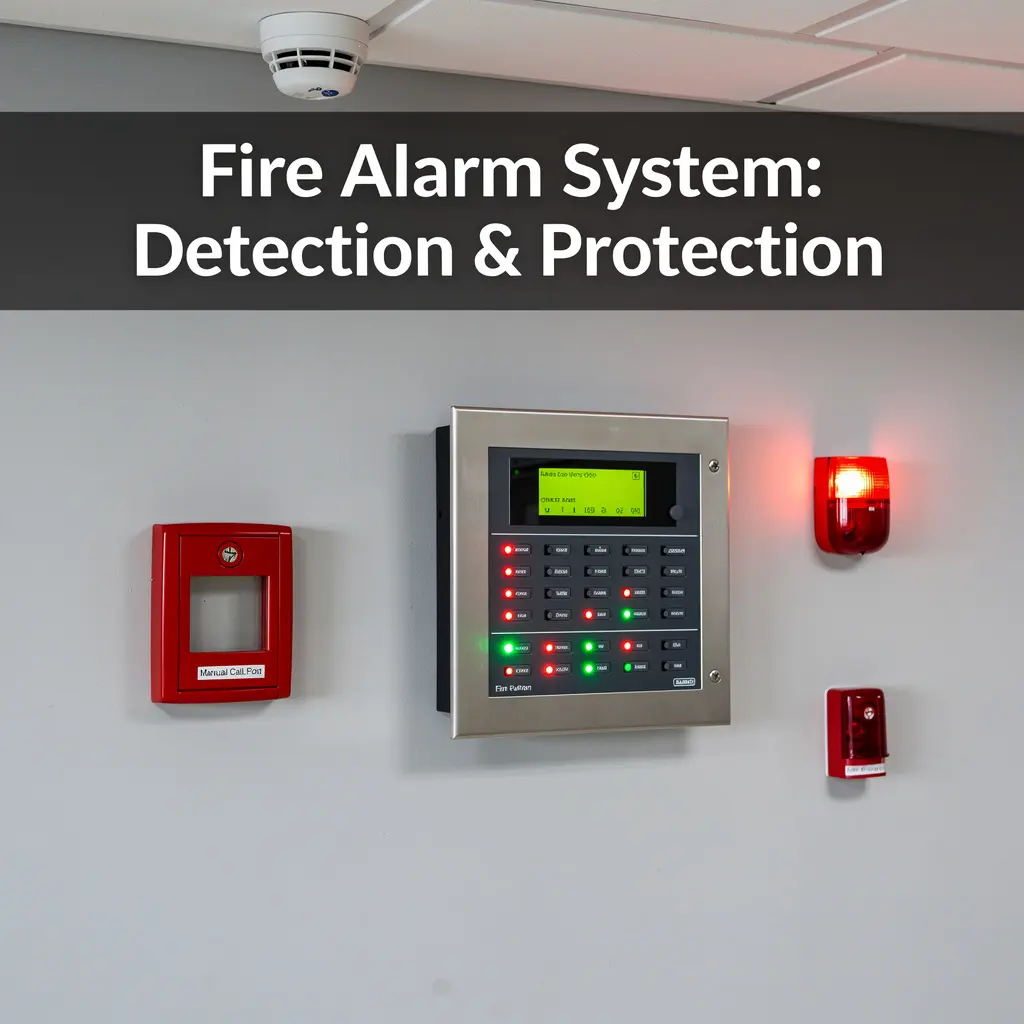
- Fire Alarm Control Panel (FACP): The central brain of the system — receives signals from all detection devices, processes alarm conditions, activates notification appliances, and interfaces with suppression systems and building management platforms.
- Smoke Detectors: Photoelectric and ionization detectors that identify airborne combustion particles — the most widely deployed detection device across commercial and residential facilities.
- Heat Detectors: Fixed-temperature and rate-of-rise detectors that activate when ambient temperature exceeds a predetermined threshold — ideal for kitchens, boiler rooms, and dusty industrial environments where smoke detectors may produce false alarms.
- Gas Detectors: Sensors that identify the presence of combustible or toxic gases — critical for industrial facilities, laboratories, and oil and gas installations.
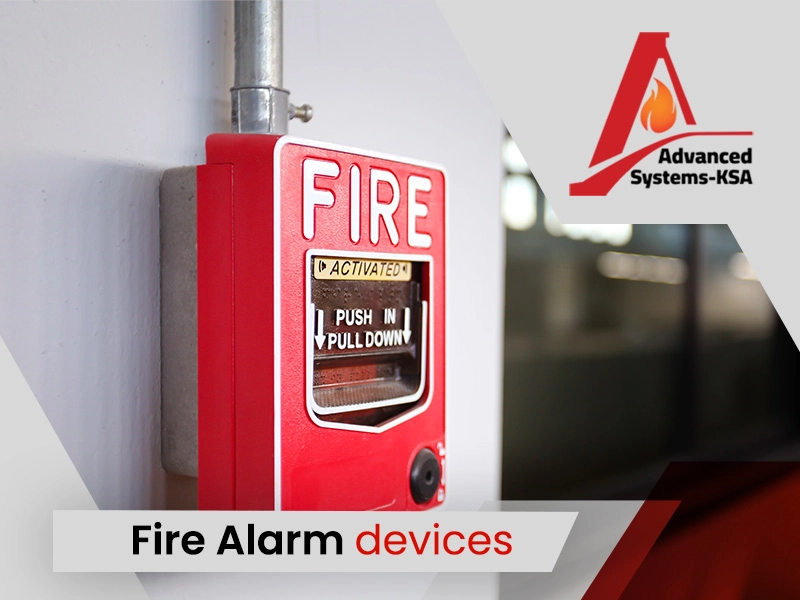
- Manual Call Points: Wall-mounted break-glass devices that allow occupants to manually trigger the fire alarm from any location within the facility.
- Notification Appliances: Sounders, bells, voice evacuation systems, and visual strobes that alert all building occupants simultaneously when an alarm condition is detected.
- Beam Detectors: Long-range infrared detection devices ideal for open-plan spaces, atriums, warehouses, and large industrial halls where standard point detectors would require impractical installation densities.
- Addressable Modules: Interface devices that connect conventional detectors, door holders, suppression system triggers, and other field devices to an addressable control panel network.
smoking detactors
Conventional vs. Addressable Fire Alarm Systems
Selecting the right fire alarm system architecture is a fundamental decision that affects detection accuracy, maintenance efficiency, and long-term system management capability. Understanding the available Fire Alarm Types is essential before any design decision is made:
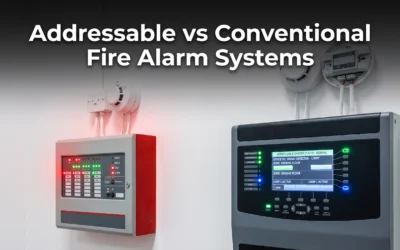
- Conventional Fire Alarm Systems: Detectors are wired into zones, and the control panel identifies which zone has triggered — suitable for smaller, simpler facilities where zone-level location information is sufficient for emergency response.
- Addressable Fire Alarm Systems: Every detector and device on the network has a unique address, allowing the control panel to identify the exact device that has activated — providing precise location information that dramatically accelerates emergency response in large or complex facilities.
- Wireless Fire Alarm Systems: Radio-frequency-based systems that eliminate the need for wired connections between devices — ideal for heritage buildings, temporary installations, or retrofit projects where cable routing is impractical or disruptive.
- Hybrid Systems: Combinations of addressable and conventional architectures that allow new addressable panels to interface with existing conventional device networks during phased upgrades.
Industries That Require Certified Fire Alarm Systems in Saudi Arabia
Saudi Civil Defense regulations mandate the installation of certified fire alarm systems across virtually every occupied building category in the Kingdom. Advanced Systems delivers compliant installations across all major sectors:
- Commercial Buildings and Office Towers: Full addressable systems with voice evacuation, stairwell pressurization interfaces, and BMS integration for intelligent building management.
- Healthcare Facilities: Hospitals and clinics require fire alarm systems that protect patients who cannot self-evacuate, with staged evacuation protocols and nurse call system integration.
- Industrial and Manufacturing: Heavy-duty detection systems designed to perform reliably in dusty, humid, or chemically active environments where standard detectors require specialist selection.
- Hospitality: Hotels and resorts need systems that cover every guest room, corridor, kitchen, and back-of-house area with minimal false alarm risk and guest comfort maintained.
- Data Centers and Telecom: Very Early Smoke Detection Apparatus (VESDA) and addressable systems that identify the earliest traces of smoke before visible combustion occurs, allowing intervention before equipment is damaged.
- Educational Institutions: Schools and universities require clear, reliable notification systems covering large campuses with multiple buildings and high occupant densities.
- Oil, Gas, and Petrochemical: Intrinsically safe detection systems certified for hazardous area classifications, integrated with gas detection and suppression control platforms.
How Advanced Systems Designs and Installs Fire Alarm Systems
Advanced Systems follows a structured, engineering-led project delivery process for every fire alarm system installation to ensure technical compliance, reliable performance, and successful Civil Defense approval:
- Site Survey and Risk Assessment: Our engineers assess the facility layout, occupancy classification, ceiling heights, environmental conditions, and any specific detection challenges before proposing a system design.
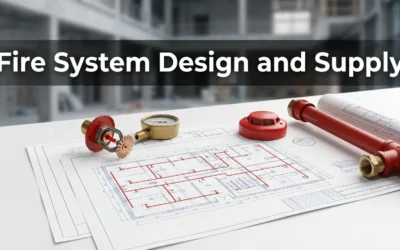
- System Design and Device Layout: We produce complete design drawings specifying detector types and locations, cable routing, control panel positioning, notification appliance coverage, and suppression system interfaces — all in compliance with NFPA 72 and Saudi Civil Defense codes.
- Civil Defense Approval Coordination: Advanced Systems manages the full technical submission and approval process with the Saudi Civil Defense authority on behalf of the client.
- Certified Product Supply: All detection devices, control panels, and notification appliances are sourced from internationally certified manufacturers carrying UL, FM, or EN certifications.
- Professional Installation and Cable Management: Our installation teams execute every project to the approved drawings with precision, ensuring correct device placement, secure cable terminations, and clean professional workmanship throughout.
- Testing, Commissioning, and Training: Every system undergoes comprehensive functional testing before handover. Facility staff receive full operational training, and complete as-built documentation is provided at project completion.
Integrating Fire Alarm Systems with Suppression and Safety Infrastructure
A fire alarm system delivers its maximum value when fully integrated with the facility’s broader fire protection infrastructure. Advanced Systems designs every alarm installation with seamless interfacing to suppression systems — including FM200 Fire Suppression Systems for data centers and sensitive equipment rooms — ensuring that detection triggers suppression activation with the minimum possible delay. For mission-critical projects, we deploy leading certified control platforms including the Potter Fire Alarm System, a globally trusted solution with advanced addressable architecture, reliable suppression panel interfacing, and comprehensive event logging that supports compliance audits and maintenance planning across complex multi-zone facilities.
Why Choosing the Right Fire Alarm System Provider Matters
A fire alarm system that is incorrectly designed, poorly installed, or built from non-certified components creates a dangerous gap in your facility’s fire safety strategy — one that may not become apparent until an actual emergency occurs. Common failures in substandard installations include incorrect detector spacing that leaves unmonitored zones, control panels that cannot reliably detect fire alarm signals from all field devices, notification systems with insufficient coverage, and integration failures that prevent suppression systems from activating on alarm.
Advanced Systems eliminates these risks through engineering discipline, certified product supply, and a commissioning process that verifies every element of system performance before handover. Our track record across commercial, industrial, healthcare, and infrastructure projects throughout Saudi Arabia reflects a consistent commitment to technical quality and client confidence.
Advanced Systems: Your Fire Alarm System Specialist in Saudi Arabia
Advanced Systems is a leading fire protection provider in the Kingdom of Saudi Arabia, delivering certified fire alarm system design, supply, installation, commissioning, and maintenance services for facilities of every type and scale. Our engineering team brings deep technical expertise in addressable detection systems, hazardous area installations, suppression integration, and Saudi Civil Defense compliance — ensuring every project we deliver performs exactly as designed when it matters most.
Contact Advanced Systems today to discuss your fire alarm system requirements and receive a tailored engineering proposal for your facility.
Frequently Asked Questions About Fire Alarm Systems
What is the difference between a conventional and addressable fire alarm system?
A conventional fire alarm system identifies the zone where a detector has activated, while an addressable system identifies the exact device — providing precise location information for faster emergency response. Addressable systems are recommended for medium to large facilities where pinpoint detection accuracy is essential.
What standard governs fire alarm system installation in Saudi Arabia?
Fire alarm system design and installation in Saudi Arabia must comply with NFPA 72 — the National Fire Alarm and Signaling Code — as well as applicable Saudi Civil Defense regulations. Advanced Systems designs every installation to these standards on every project.
How often should a fire alarm system be tested and maintained?
Saudi Civil Defense regulations and NFPA 72 require regular inspection, testing, and maintenance of fire alarm systems — typically at quarterly and annual intervals depending on system type and facility classification. Advanced Systems offers structured maintenance programs to keep your system fully compliant and operationally ready.
Can Advanced Systems upgrade an existing fire alarm system?
Yes. Advanced Systems has extensive experience upgrading conventional systems to modern addressable platforms, expanding existing installations to cover new facility areas, and retrofitting detection and notification devices in occupied buildings with minimal operational disruption.
Read Also:
Choosing the Best Fire Sprinklers Companies in Saudi Arabia
Firefighting Water Sprinkler Network
The function of fire hydrant and monitor is to keep lives safe