by Mohamed Elbebhairy | Feb 2, 2026 | Events
Fire fighting fittings are vital in fire protection systems. They play a key role in controlling and putting out fires.These fittings facilitate the efficient flow of water or other extinguishing agents from hydrants, pumps, and hoses to the fire site, enabling firefighters to swiftly and effectively combat emergencies.
In this article, we will explore the diverse range of fire fighting fittings and their functions, shedding light on their significance in safeguarding lives and property.
Fire fighting Fittings Types
Fire Hose Couplings
Fire hose couplings are essential for seamlessly connecting fire hoses and other firefighting equipment. These fittings enable the secure and efficient transfer of water or firefighting foam. There are different types of fire hose couplings available, depending on regional standards and requirements. There are several types of couplings:
- Instantaneous couplings: such as Storz and Nakajima couplings, are widely used due to their quick and reliable connection mechanisms. They feature symmetrical lugs that interlock when the couplings are joined, ensuring a tight seal.
- Threaded couplings: including National Pipe Thread (NPT) and British Standard (BS) couplings, rely on threaded connections for secure attachment. These couplings require careful matching of thread sizes and types for proper functionality.
- Quarter-Turn Couplings: They offer rapid connection with just a quarter-turn twist. They are commonly used in some European countries and are gaining popularity in other regions due to their ease of use.
Fire Hydrant Fittings
Fire hydrants are vital components of fire protection systems, providing a readily available water supply for firefighting operations. Fire hydrant fittings allow fire hoses to be connected and disconnected easily, ensuring a swift response to fire incidents. These fittings include:
- Hydrant valves: regulate the flow of water from the hydrant to the fire hose.
- Adapters: help in connecting hoses of different sizes or coupling types to the hydrant.
- Caps: protect the hydrant outlets from debris and ensure their functionality during emergencies.
Regular maintenance and inspection of fire fighting fittings, including hydrant fittings, are necessary to ensure proper operation. This includes checking for leaks, ensuring smooth valve operation, and verifying the integrity of adapter threads.
Fire Hose Nozzles
Fire hose nozzles are critical for controlling the flow and direction of water or firefighting foam during fire suppression efforts. This type of fire fighting fittings determines the spray pattern and flow rate, allowing firefighters to adapt to different fire scenarios effectively. Several types of fire hose nozzles are available, each with its specific features.
Adjustable fog nozzles allow firefighters to adjust the spray pattern from a concentrated stream to a wide fog pattern. This flexibility is useful when dealing with different fire sizes and types. Smooth bore nozzles have a fixed orifice size, providing a concentrated stream for effective penetration into the fire. Combination nozzles offer a combination of both fog and straight stream patterns, providing versatility in firefighting operations.
Choosing the appropriate nozzle type depends on factors such as the available water supply and the desired firefighting technique. Regular inspection and maintenance of fire hose nozzles are essential to ensure their proper functionality.
Fire Pump Fittings
Fire pumps are essential for boosting water pressure in fire protection systems, ensuring an adequate water supply to fight fires. The fire pump fittings’ role is to connect the pumps to water sources and piping systems. This type of fire fighting fittings includes:
- Suction strainers: They prevent debris from entering the fire pump, protecting its internal components.
- Suction and discharge flanges: These provide secure connections between the pump and the piping system.
- Check valves: These valves allow water to flow in one direction, preventing backflow and maintaining system pressure.
To ensure that fire pump fittings operate and perform reliably, they must be installed meticulously and maintained consistently. This involves tasks such as examining suction strainers for any obstructions, scrutinizing the condition of gaskets and seals, and validating the effectiveness of check valves through testing.
Fire Sprinkler Fittings
Fire sprinkler systems are a vital component of fire protection in buildings, providing automatic fire suppression capabilities. Fire sprinkler fittings connect the sprinkler piping network, ensuring the proper distribution of water in case of a fire. These fittings include sprinkler heads, risers, and tees.
- Sprinkler heads: They are the visible part of the system and activate when exposed to high temperatures.
- Risers: connect the main water supply to the sprinkler system
- Tees: allow the branching of the piping network.
This type of fire-fighting fittings must be carefully selected, installed, and tested to ensure their proper operation during fire emergencies. Their maintenance includes checking for corrosion, ensuring proper alignment of sprinkler heads, and verifying the integrity of riser connections.
Fire Extinguisher Fittings
Firefighing Tools
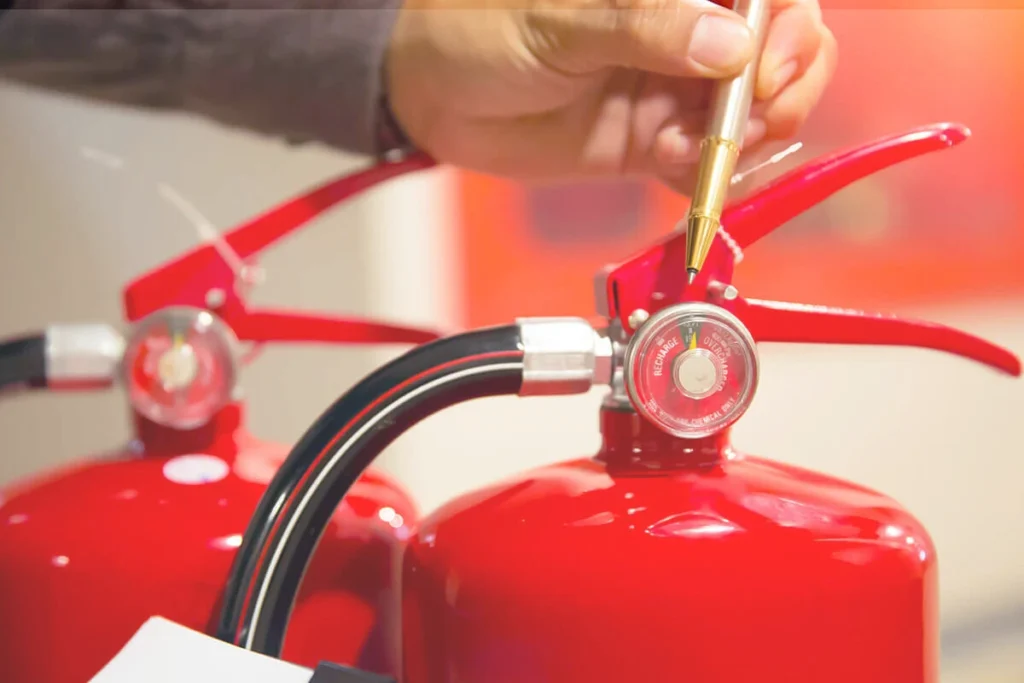
Fire extinguishers are portable devices used for immediate fire suppression. These devices often have specific fittings to connect hoses or nozzles for the discharge of extinguishing agents. Fire extinguisher fittings typically include valves, discharge horns, and pressure gauges. The following explains the function of each one:
- Valves: Valves in fire extinguishers regulate the flow of extinguishing agents, allowing users to control the discharge.
- Discharge horns: These are attachments that direct the flow of the extinguishing agent, ensuring it reaches the desired target.
- Pressure gauges: They provide visual indications of the pressure within the extinguisher, allowing users to monitor its readiness for use.
Checking for leaks, verifying the condition of valves and discharge horns, and ensuring accurate pressure readings are important steps in their maintenance.
Conclusion
Fire fighting fittings are indispensable components of fire protection systems, enabling the effective control and extinguishment of fires. From fire hose couplings to fire extinguisher fittings, each type of fitting plays a specific role in ensuring the reliability and efficiency of firefighting operations.
Proper selection, installation, and maintenance of fire fighting fittings are of the utmost importance. Regular inspections, testing, and adherence to industry standards and regulations are necessary to ensure the functionality and safety of these fittings.
Contact Advanced Systems now and get a consultation regarding the appropriate fire fighting fittings in your porperty’s firefighting system.
Read More:
The Best Fire Sprinklers Companies
fire hydrant and monitor
Fire Hydrant Pump
Foam Firefighting Equipment in Saudi Arabia
Fire Hose Cabinet Price
Fire Alarm Types
Conventional Fire Alarm Panels
by Mohamed Elbebhairy | Dec 24, 2025 | Events
Fire safety is a paramount concern in any environment, whether residential, commercial, or industrial. Implementing effective firefighting systems is crucial in mitigating the risks associated with fires. It is essential to understand the different types of systems available and how they each help address unique fire risks.
This article will explore the question, “How many types of firefighting systems?” and the diverse range of systems designed to combat different types of fires.
Water-Based Fire Suppression Systems
-
Wet Pipe Sprinkler Systems
Wet pipe sprinkler systems, the most prevalent water-based fire suppression method, maintain a constant water supply within pipes. This ensures an immediate response to fire events, making them ideal for various settings. Their straightforward design, quick response time, and low maintenance requirements contribute to their reliability in safeguarding commercial buildings, residential spaces, and warehouses.
-
Dry Pipe Sprinkler Systems
Designed to address freezing concerns, dry pipe sprinkler systems utilize pressurized air or nitrogen instead of water, releasing water only when a sprinkler head is activated. This innovative approach makes them suitable for environments where freezing is risky, providing effective fire protection in unheated warehouses or cold climate parking garages.
-
Pre-Action Sprinkler Systems
Pre-action systems require a two-step activation, filling pipes with air first and releasing water upon fire detection. It is suitable for areas sensitive to accidental discharges.
Deluge systems use open sprinklers connected to a water supply for rapid, simultaneous water application. Effective in high-hazard environments with a need for intense water discharge.
-
High-Pressure Water Mist Systems
Utilizing fine water droplets and high-pressure water mist systems cool fires, displace oxygen, and inhibit combustion reactions. Ideal for environments where water damage is a concern.
Read More: Fire Hydrant Pump Prices
Gas-based fire suppression systems
Gas-based fire suppression systems, including clean agent and carbon dioxide (CO2) systems, play a pivotal role in advanced fire safety. Clean agent systems employing gases like FM-200 or inert gases swiftly reduce oxygen levels, extinguishing fires without residue. CO2 systems are highly effective for flammable liquids and electrical fires, displacing oxygen to starve the fire.
These systems find applications in data centers, server rooms, museums, and industrial facilities, offering rapid and efficient suppression without water damage. While advantageous, careful consideration is crucial due to safety concerns associated with certain gases. This evolving technology continues to refine gas-based systems for enhanced fire protection.
Foam-based fire suppression systems
Foam-based fire suppression systems are essential for effectively controlling flammable liquid fires, offering versatility and rapid response in high-risk environments. Foam sprinkler systems release a blanket of foam over fuel surfaces, preventing the release of flammable vapors commonly applied in chemical plants and industrial settings. High-expansion foam systems designed for enclosed spaces generate large volumes of foam to smother fires in places like aircraft hangars.
The advantages of foam-based systems lie in their quick and efficient suppression, particularly tailored for flammable liquid hazards. However, applying foam may pose challenges regarding clean-up and potential water damage. Thorough risk assessments are crucial to determining the most suitable foam type and concentration for specific fire risks, ensuring a comprehensive fire safety strategy in diverse industrial and commercial settings.
Read More: The Foam Fire Suppression for Sale in KSA
Powder-based fire suppression systems
Powder-based fire suppression systems, exemplified by dry chemical systems using ABC or BC powders, are versatile solutions that interrupt combustion processes in various fire classes. Their adaptability makes them valuable in industrial facilities, commercial buildings, and electrical rooms where fire hazards exist. These systems are essential for comprehensive fire safety and offer a rapid and effective response. However, their use may result in residue and clean-up challenges, emphasizing the importance of thorough risk assessments and carefully selecting powder types tailored to specific fire risks to ensure optimal suppression in diverse environments.
How many types of firefighting systems exist?
Other systems may include:
- Specialized Systems: CO2 systems effectively tackle electrical and flammable liquid fires, suppressing flames without residue. Fire hydrant systems provide essential water sources for manual firefighting efforts in various settings.
- Fire Extinguishers: portable devices with specific agents for small-scale firefighting, including water, foam, dry powder, and CO2, tailored for distinct fire classes.
In conclusion, the question “How many types of fire fighting systems?” unveils various solutions tailored to address different fire hazards. Implementing the right combination of fire suppression systems based on a thorough risk assessment is crucial for ensuring the safety of occupants and assets. Advanced Systems provides tailored firefighting services. Contact us now.
Read Also :
Fire Cabinet Hose Suppliers in KSA
Fire water booster pump
Conventional Fire Alarm Panels
Fire hydrant and monitor
Fire Alarm Devices
Fire water pump manufacturers
by Mohamed Elbebhairy | Dec 24, 2025 | Events
Fire safety is paramount in any building; readily available equipment can make all the difference in an emergency. Fire hose cabinets are among the essential components of a robust fire protection system. In this article, we’ll explore fire hose cabinet types, their purposes, and the factors to consider when choosing the right one for your needs.
The Purpose of Fire Hose Cabinets
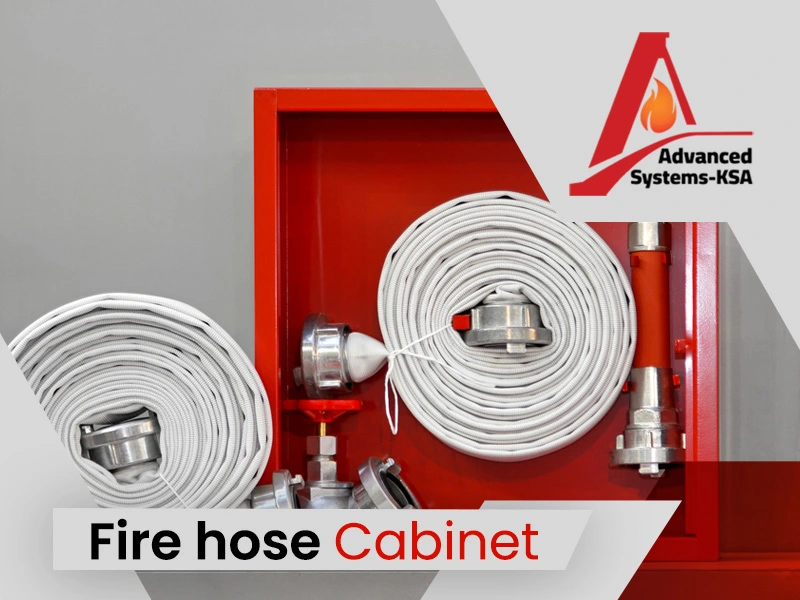
Fire hose cabinets serve as dedicated storage units for fire hoses, providing a centralized and easily accessible location for firefighting equipment. Their primary purpose is to house and protect fire hoses, ensuring they are readily available for immediate use during emergencies. Fire hose cabinets are strategically placed throughout a building to maximize accessibility and minimize response time.
Moreover, fire hose cabinets safeguard fire hoses from external elements, such as dust, dirt, and damage, which can compromise their functionality. These cabinets are typically constructed using durable materials, such as steel or fiberglass, to withstand the rigors of a fire-prone environment. They are designed to provide secure storage, preventing unauthorized access and reducing the risk of tampering or theft.
Fire Hose Cabinet Types
Recessed Fire Hose Cabinets
These cabinets are installed within the wall, flush with the surface, to maintain a streamlined appearance. Recessed cabinets are commonly found in commercial buildings, offices, and residential complexes, offering a discreet and aesthetically pleasing solution.
Surface-Mounted Fire Hose Cabinets
This type of fire hose cabinet types is attached to the wall’s surface. While it may be more visible than recessed cabinets, it is often easier to install in locations where recessing into the wall is impractical. Surface-mounted cabinets are commonly used in industrial settings, warehouses, and older buildings where wall structures may not accommodate recessed installations.
Semi-Recessed Fire Hose Cabinets:
Semi-recessed fire hose cabinets compromise the neatness of recessed cabinets and the accessibility of surface-mounted ones. These cabinets partially protrude from the wall, balancing aesthetics and practicality. Semi-recessed cabinets are often chosen for spaces where a sleek appearance is desired without sacrificing ease of access.
Outdoor Fire Hose Cabinet
Outdoor fire hose cabinets are built to withstand the rigors of external environmental conditions. These cabinets are weather-resistant, protecting the hoses and equipment from the elements. They are commonly installed in areas where fire hoses may be needed outdoors, such as parking lots, loading docks, or exterior building perimeters.
Factors to Consider When Choosing Fire Hose Cabinets
When selecting fire hose cabinets for your building or facility, several factors should be taken into consideration:
- Size and Capacity: Choose a fire hose cabinet size based on the length and diameter of the fire hoses it will hold.
- Material and Construction: Opt for durable materials like steel or fiberglass for fire hose cabinets. These materials withstand fire, moisture, and environmental factors, providing strength and corrosion resistance.
- Compliance with Standards: Select fire hose cabinets that comply with safety standards. Compliance ensures meeting minimum safety requirements for effective functioning during emergencies.
To ensure optimal fire safety in your building, contact “Advanced Systems” where our experts can provide comprehensive fire fighting solutions tailored to your needs. Safeguard lives and protect your property with our reliable solutions.
know more about:
Fire Alarm Devices
Firefighting Tools And Equipments
Fire water pump manufacturers
Fire Sprinklers
Fire hydrant
Fire hydrant and monitor

by Mohamed Elbebhairy | Dec 24, 2025 | Events
A firefighting system combines equipment, devices, and procedures to detect, control, and extinguish fires. It includes various components that work together to minimize the impact of fires and protect life, property, and the environment. This guide explores the significance of these systems and their diverse applications.
Types of Firefighting Systems
There are several types of firefighting systems designed to detect, control, and extinguish fires. Here are some common types:
Water-Based Systems
- Sprinkler Systems: Automatic sprinkler systems are widely used and consist of a network of pipes with sprinkler heads that release water when heat is detected. They are effective in suppressing fires and controlling their spread.
- Water Mist Systems: These systems disperse fine water droplets to cool the fire and reduce oxygen levels. Water mist systems are suitable for a wide range of applications and can be used in areas where water damage needs to be minimized.
Gaseous Suppression Systems
- Carbon Dioxide (CO2) Systems: The CO2 firefighting system displaces oxygen, reducing its concentration and suffocating the fire. They are commonly used in areas with sensitive equipment and materials, such as electrical rooms or server rooms.
- Clean Agent Systems (e.g., FM-200, Novec 1230): These firefighting systems use clean agents that do not leave residue or damage sensitive equipment. They are suitable for protecting valuable assets in areas such as control rooms, data centers, or museums.
Foam-Based Systems
- Foam Sprinkler Systems: These firefighting systems discharge foam, which creates a blanket that separates the fuel from oxygen, suppressing the fire. They are commonly used in areas with flammable liquids, such as warehouses or chemical storage facilities.
- Foam Pourer Systems: Foam pourer systems deliver foam directly onto the fuel surface, providing rapid fire suppression. They are often used in areas with flammable liquid storage tanks or helipads.
Dry Chemical Systems
These systems use dry chemical powders, such as ABC or BC powder, to extinguish fires by interrupting the chemical reaction. They are versatile and suitable for various fire hazards, including flammable liquids, gases, and electrical fires.
Smoke Management Systems
- Smoke Exhaust Systems: These systems remove smoke from a building, improving visibility for occupants and aiding evacuation.
- Pressurization Systems: Pressurization systems create a pressure differential to prevent the movement of smoke into protected areas, such as stairwells or escape routes.
- Smoke Curtains: Smoke curtains are deployed to contain or channel smoke, preventing its spread to other areas of the building.
Elements of A Firefighting System
The following is a breakdown of the elements that must be present in every firefighting system:
Fire Detection
Fire detection involves the use of smoke detectors, heat detectors, flame detectors, or a combination of these devices to identify the presence of a fire. Once a fire is detected, it triggers an alarm to alert occupants and initiates the response sequence.
Fire Suppression Systems
These systems are designed to extinguish fires or control their spread. They can be categorized into two main types:
- Active Fire Suppression: These systems use agents such as water, foam, gas (e.g., CO2), or chemicals to extinguish the fire. Examples include the systems mentioned above as water mist systems, gas suppression systems, and foam systems.
- Passive Fire Suppression: These systems are designed to contain or slow down the spread of fire. Examples include fire-resistant doors, fire-resistant walls, fire-rated windows, and fire dampers in ventilation systems.
Firefighting Equipment
Firefighting tools and equipment include portable fire extinguishers, fire hoses, fire hydrants, fire blankets, and other tools that enable occupants or trained personnel to extinguish or control small fires before they escalate.
Fire Alarm and Communication Systems
These systems provide early warning and communication during a fire incident. They include fire alarm panels, public address systems, emergency lighting, and evacuation signage to facilitate safe evacuation.
Emergency Response Plan
A comprehensive firefighting system should have an emergency response plan in place. This plan outlines procedures for reporting fires, evacuating occupants, notifying emergency services, and coordinating the firefighting efforts.
Training and Education
Proper training and education are crucial for ensuring that occupants and personnel understand fire safety procedures, evacuation routes, and how to use firefighting equipment effectively. Regular drills and exercises help familiarize individuals with emergency protocols.
Firefighting System Applications
Firefighting systems find applications in various settings where fire protection is essential such as:
- Residential buildings: Apartment complexes, condominiums, and single-family homes.
- Commercial Buildings: Office buildings, retail stores, hotels, and shopping centers require these systems to ensure the safety of occupants and protect valuable assets.
- Industrial Facilities: Manufacturing plants, warehouses, and industrial complexes have unique fire hazards due to the presence of flammable materials, machinery, and processes.
- Healthcare Facilities: Hospitals, clinics, and medical centers have a high concentration of people, including patients who may have limited mobility. The Fire systems in healthcare facilities are designed to facilitate safe evacuation and protect sensitive medical equipment.
- Educational Institutions: Schools, colleges, and universities require firefighting systems to protect students, staff, and educational resources.
- Transportation Infrastructure: Fire protection is critical in transportation hubs such as airports, train stations, and bus depots.
- Data Centers and Server Rooms: Data centers house valuable electronic equipment and have unique fire risks.
Fire Fighting System Suppliers in Saudi Arabia
The Saudi Arabian market boasts a diverse range of firefighting system suppliers, each offering unique solutions to cater to various needs. Among them, Advanced Systems stands out for its commitment to delivering high-quality fire protection equipment and services. Leveraging our extensive experience in the field, we aim to become a leading provider in the region.
Our team of skilled professionals uses our expertise to provide clients with optimal fire protection solutions for their assets, projects, and facilities. By offering cost-effective options and top-notch project design, Advanced Systems prioritizes the safety of lives, property, and valuables.
Additionally, our dedication to continuous learning and innovation ensures clients receive the most up-to-date technology and support available. Get in touch with us now for a consultation about the most appropriate fire system for your property.
Read More:
Fire Alarm Types
Fire Hose Cabinet Types
Fire water booster pump
The Foam Fire Suppression
Fire Alarm Devices
The Best Fire Sprinklers Companies
Fire hydrant and monitor
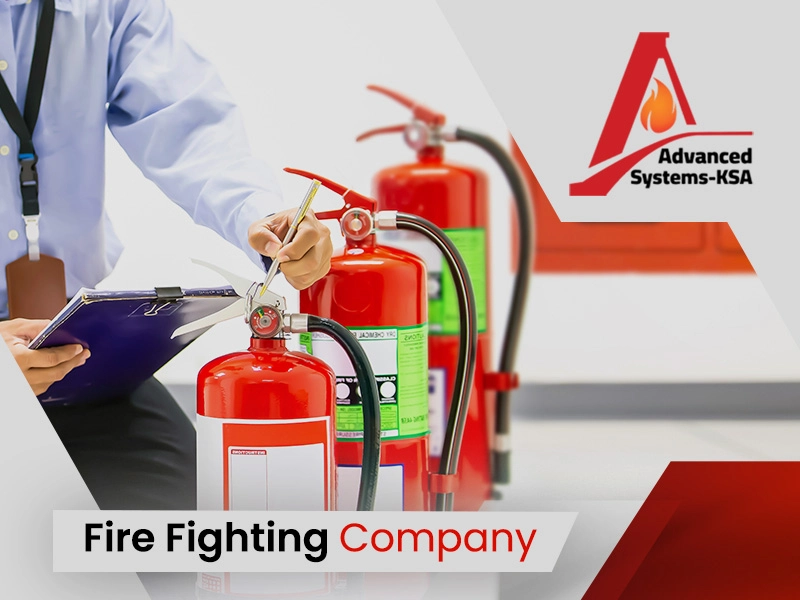
by Mohamed Elbebhairy | Dec 8, 2025 | Events
Recognizing the critical importance of ensuring the safety of individuals and property, property managers, businesses, companies, and factory owners in Saudi Arabia are increasingly understanding the necessity of installing firefighting systems. In their quest for a reliable firefighting company in Saudi Arabia, they seek providers that offer a comprehensive array of services, encompassing fundamental safety solutions.
This article reveals the services that these companies may provide and includes a brief about “Advanced Systems” your firefighting solution partner in KSA.
What services does a firefighting company in Saudi Arabia provide?
A firefighting company solutions provider typically offers a range of services to provide clients with comprehensive fire safety and protection solutions. Some of the most essential services provided by such companies include:
Fire Suppression Systems Installation and Maintenance
Any firefighting company in Saudi Arabia has expertise in the design, installation, and upkeep of various fire suppression systems, ranging from automatic sprinkler systems to fire extinguishers, fire hydrants, and fire pumps. These companies prioritize precision during installation, ensuring each component is placed correctly to guarantee optimal functionality. Compliance with relevant codes and regulations is paramount, as they meticulously adhere to industry standards to enhance the overall effectiveness of the fire suppression systems.
Moreover, these companies understand the importance of ongoing maintenance to uphold the reliability of fire suppression systems. Regular inspections are conducted to identify potential issues, and routine maintenance is performed to address any wear and tear, ensuring that all components are in top condition.
By offering comprehensive installation and maintenance services, firefighting companies play a critical role in safeguarding residential and commercial spaces, providing a proactive approach to fire safety essential for protecting lives and property.
Fire Alarm Systems
A firefighting company in Saudi Arabia as Advanced Systems, offers installing and maintaining fire alarm systems. This includes smoke detectors, heat detectors, fire alarm control panels, and other components that detect and alert occupants during a fire. They ensure these systems’ proper placement and functionality to provide early warning and facilitate swift evacuation.
Read more about : Fire Alarm Types – Fire Alarm System
Emergency Lighting Systems
These companies also install and maintain emergency lighting systems that illuminate during power outages or emergencies. Emergency lighting is crucial for safe evacuation and navigation in dark or smoky conditions. A firefighting company in Saudi Arabia ensures that emergency lighting systems comply with regulations, are strategically placed, and undergo regular testing and maintenance.
Fire Safety Training and Education
A critical service that has to be provided by any firefighting company in Saudi Arabia is fire safety training and education. These companies offer comprehensive training programs for employees, building occupants, and management teams on fire safety protocols, evacuation procedures, the proper use of fire extinguishers, the use of the control panel, and general fire prevention practices. These training sessions help raise awareness, enhance preparedness, and improve an organization’s overall fire safety culture.
Fire Safety Consulting and Compliance
Firefighting solutions companies offer consulting services to assist clients in achieving and maintaining compliance with fire safety regulations and codes. They provide expert guidance on fire safety measures, review building plans for compliance, and help clients implement necessary modifications and upgrades to meet the required standards.
Emergency Response Planning
These companies assist clients in developing emergency response plans tailored to their specific needs. They analyze potential fire scenarios, devise evacuation strategies, establish communication protocols, and define roles and responsibilities during emergencies. These plans ensure a coordinated and efficient response during a fire or other emergencies.
Advanced Systems: Your Premier Firefighting Company in Saudi Arabia
At Advanced Systems, we take pride in our robust technical team, which is dedicated to providing unparalleled services for safeguarding your assets, projects, and facilities. With a commitment to excellence, our skilled professionals offer optimal choices tailored to your specific needs, ensuring the highest level of fire protection. From meticulous project design to the seamless implementation of advanced fire suppression systems, we prioritize precision in every aspect of our service delivery.
Our expertise spans many offerings, including automatic sprinkler systems, fire extinguishers, fire hydrants, fire pumps, and other cutting-edge fire suppression equipment. Count on us for a comprehensive approach to fire safety, where our team’s proficiency and dedication converge to deliver solutions that meet and exceed industry standards. At Advanced Systems, we are your trusted partner in fortifying your surroundings against potential fire threats, setting the benchmark for excellence in fire protection services.
Advanced Systems is your premier ally in fire protection, offering top-tier solutions for safeguarding your assets. Contact us today for unparalleled expertise and peace of mind.
Read also:
Fire Protection Products in Saudi Arabia
Fire Fighting Gas Systems
Fire water booster pump
Fire Hose Cabinet Price
Fire Hydrant Pump

by Mohamed Elbebhairy | Dec 8, 2025 | Events
Seeking collaboration with fire safety equipment suppliers is an essential step for many properties, such as commercial buildings, industrial facilities, and residential areas, to ensure the highest safety level. These suppliers have an important role in sourcing, recommending, and providing essential fire safety gear to protect lives and property from the devastating effects of fires.
This article discusses how to choose the best safety equipment suppliers and explores the types and the most important safety equipment you have to take into consideration.
Types of Fire Safety Equipment
Fire extinguishers
Fire extinguishers provided by fire safety equipment suppliers are one of the most vital safety equipment available. These pieces of equipment are portable devices designed to suppress and extinguish small fires in their early stages, preventing them from spreading and causing further damage. There are various types, each specially designed to combat specific types of fires based on the fuel involved. The following are common types:
-
- Water Extinguishers: Suitable for Class A fires involving ordinary combustible materials such as wood, paper, cloth, and some plastics. They work by cooling the fire and reducing its heat energy. On the other hand, water extinguishers mustn’t be used for fires involving flammable liquids, electrical equipment, or cooking oil fires, as they can cause electrocution or spread the fire.
- Foam Extinguishers: They are effective for both Class A and B fires. They create a foam blanket, which helps smother the fire and prevent re-ignition. Class A indicates fire caused by the mentioned materials above, while class B involves flammable liquids, such as gasoline and oil, which can be tackled using foam extinguishers. They should not be used on electrical fires.
- CO2 (Carbon Dioxide) Extinguishers: They are suitable for Class B and Class C fires. Class C fires are dangerous because electrical equipment, appliances, and wiring cause them. CO2 extinguishers contain carbon dioxide gas that displaces oxygen, thus smothering the fire. CO2 extinguishers are commonly used to extinguish fires caused by flammable liquids and electrical equipment. They do not leave any residue after use, making them ideal for areas where cleanup is a concern.
- Dry Chemical Extinguishers: These types are versatile and can be used on various types of fires. They are effective for all mentioned classes of fires. They use a dry chemical powder, such as monoammonium phosphate or sodium bicarbonate, to interrupt the chemical reaction of the fire.
- Wet Chemical Extinguishers: They are specifically designed for Class F fires involving cooking oils and fats. These Extinguishers work by creating a cooling effect and forming a soapy layer that suppresses the fire and prevents re-ignition. These types are commonly found in commercial kitchens, restaurants, and other areas where cooking appliances are present, such as hotels.
Fire Alarms and Detection Systems
Early detection of fires is critical for timely evacuation and intervention. Fire safety equipment suppliers such as “Advanced Systems” provide a variety of Fire alarms and detection systems, including smoke detectors, heat detectors, flame detectors, and fire alarm control panels. These systems provide early warnings by detecting the presence of smoke, heat, or flames, allowing occupants to respond quickly and escape safely.
Fire Suppression Systems
Fire suppression systems are designed to suppress or extinguish fires automatically. They include sprinkler systems, foam suppression systems, and gas-based systems. These types of systems are particularly valuable in huge facilities such as malls, schools, factories, and universities or areas where manual extinguishment may not be feasible.
Role of Fire Safety Equipment Suppliers
Fire safety equipment suppliers have a critical role in ensuring effective fire safety measures for their clients, including businesses, organizations, and individuals. The following are the key roles performed by them:
Product Selection and Expertise
Fire safety equipment suppliers possess in-depth knowledge of fire safety products and their applications. They provide consultations for the unique requirements of every facility and recommend the most appropriate fire safety equipment.
They also take into consideration factors such as the type of fire hazards present, the size and layout of the space, and the regulatory compliance requirements.
Fire Safety Regulations and Compliance
Fire safety equipment suppliers stay updated on fire safety codes and regulations. At Advanced Systems, we ensure that the products they offer meet the required standards and certifications. By working with compliant suppliers, you can have confidence in the effectiveness and reliability of the fire safety equipment provided.
Installation and Maintenance Services
Fire safety equipment suppliers often provide installation, inspection, and maintenance services for the fire safety equipment they supply. These companies ensure the proper installation of the systems. They also conduct regular inspections and undergo maintenance to keep the equipment in optimal working condition.
Emergency Planning and Consulting
Some suppliers may provide additional services such as emergency planning and consulting. They can assist customers in developing comprehensive fire safety plans, including evacuation procedures, fire drills, and emergency response protocols. Suppliers may also offer guidance on the placement and positioning of fire safety equipment to ensure maximum coverage and accessibility.
Ongoing Support and Customer Service
Reliable fire safety equipment suppliers prioritize customer support and service. They are available to address any questions, concerns, or issues that their customers may have regarding the safety equipment they have purchased.
They may also provide technical support, troubleshooting assistance, and guidance on equipment upgrades or replacements. By taking this step, they build long-term relationships with their customers.
Factors to Consider When Choosing a Fire Safety Equipment Supplier
When selecting a fire safety equipment supplier, there are several essential factors to consider:
Reputation and Experience
Choose a supplier with a solid reputation and years of experience in the industry. Look for testimonials, reviews, and references from satisfied customers to gauge their reliability and professionalism. A supplier like Advanced Systems invests in its technical team to keep updated with the latest industry trends and technologies, thus providing professional services with its reputation in Egypt and the KSA.
Quality and Certification
Ensure that the supplier provides fire safety equipment of exceptional quality, adhering to recognized industry standards and certifications. Trustworthy suppliers provide safety equipment from manufacturers known for their commitment to quality and reliability.
Advanced Systems is one of the suppliers that ensures that its products meet the highest standards, offering cost-effective solutions to protect lives, properties, and assets from the dangers of fire and its consequences.
Support and Training
You should consider suppliers who offer ongoing support and training to their customers. This includes assistance with installation, regular maintenance, and providing training programs and resources that empower individuals to use and maintain fire safety equipment.
In conclusion, fire safety equipment suppliers such as Advanced Systems play an important role in safeguarding lives and property from the destructive impact of fires, enabling individuals and organizations to implement effective fire safety measures by providing a wide range of fire safety equipment.
Choosing the right supplier ensures access to high-quality, compliant products and the peace of mind that comes from knowing that the fire safety equipment is reliable and ready to protect in case of emergencies.
Read More:
Firefighting Company in Saudi Arabia

Fire Alarm Control Panel

Firefighting Systems

Fire protection products

Fire Fighting Gas Systems

Fire Hydrant Pump Prices

Fire Hose Cabinet Price

Fire water booster pump

Fire Alarm Types

Foam Firefighting Equipment
Page 2 of 6«12345...»Last »